

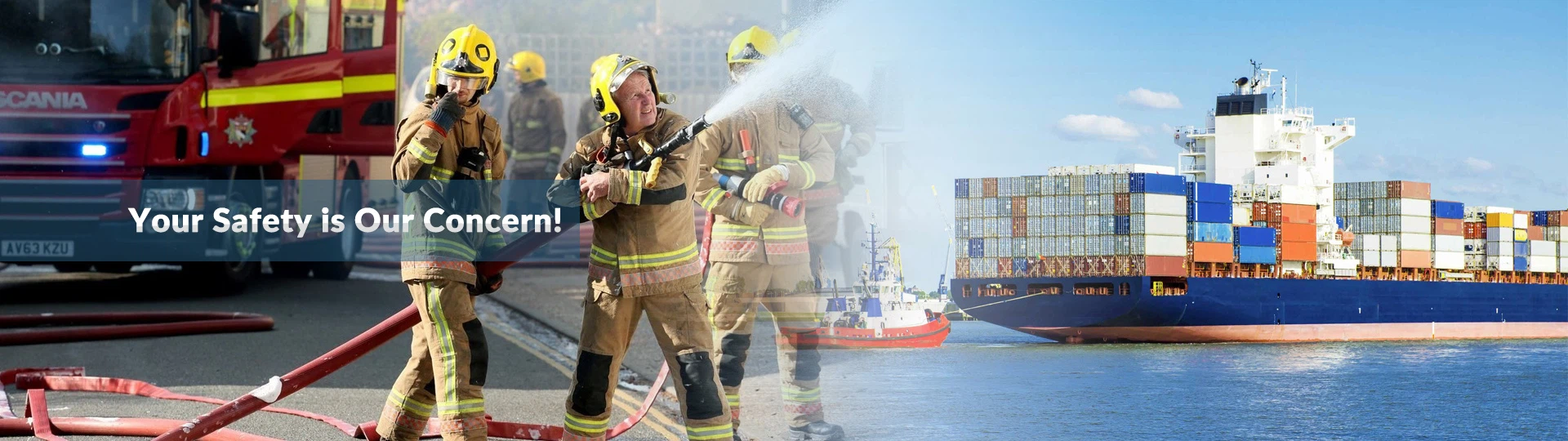
SCBA (Self-Contained Breathing Apparatus) Requirements on Board Vessels
Self-Contained Breathing Apparatus (SCBA) is a critical safety equipment used on board vessels or offshore platform to protect personnel from hazardous atmospheres, such as those involving toxic gases, smoke, or oxygen-deficient environments. SCBAs are essential during firefighting, emergency response, tank entry, or maintenance in confined or hazardous spaces.
🔹 Regulatory Frameworks Governing SCBA on Vessels
Several international maritime regulations and guidelines mandate the carriage and proper maintenance of SCBA on board vessels:
1. SOLAS (Safety of Life at Sea) Convention – Chapter II-2
Part C: Fire Detection and Fire Extinction
Regulation 10: Requires ships to carry fireman's outfits, which must include breathing apparatus.
Minimum Requirement: At least two sets of fireman's outfits, each including:
A breathing apparatus (normally SCBA) with at least a 15-minute air supply (though many modern systems exceed this).
Protective clothing, boots, gloves, helmet with face shield, etc.
Additional sets may be required based on ship type, size, and risk (e.g., chemical carriers, gas carriers, oil tankers).
2. IMO MSC/Circ.1480 / MSC.1/Circ.1480
Provides guidelines for the maintenance and inspection of firefighter's outfits and breathing apparatus, including SCBA.
Emphasizes regular inspections, testing, and maintenance to ensure SCBAs are operational during emergencies.
3. IFC (International Fire Code) & NFPA Standards (for reference)
While not directly applicable to all vessels, NFPA 1971 (Standard on Protective Ensembles for Structural Fire Fighting and Proximity Fire Fighting) and NFPA 1981 (Open-Circuit Self-Contained Breathing Apparatus for Emergency Services) provide useful technical standards often referenced or aligned with.
4. Flag State & Class Society Requirements
Each flag state (e.g., China, Panama, Liberia) and classification society (e.g., DNV, ABS, Lloyd's Register) may have additional or more stringent requirements.
Ships must comply with both international conventions and local flag administration rules.
🔹 Types of SCBA Commonly Used on Ships
Open-Circuit SCBA: Most common onboard; exhaled air is vented out, not recycled.
Air Supply Duration: Typically 15–60 minutes, though 30-minute models are most standard.
Pressure: Usually operates at 200–300 bar (2900–4350 psi).
Features:
Positive pressure face mask
High-visibility harness

Pressure gauge and low-air warning devices
Air cylinder (Steel alloy or Carbon fiber compostie materials made)
🔹 Minimum Number of SCBA Units Required Onboard
While SOLAS mandates at least two complete fireman's outfits with breathing apparatus, many vessels carry additional units depending on:
Ship type (e.g., Tanker, Chemical Carrier, LNG vessel)
Number of crew
Number of hazardous zones (e.g., cargo tanks, engine rooms, battery rooms)
Flag and class-specific requirements
✅ Best Practice: Carry at least one extra SCBA unit beyond regulatory minimums, and ensure coverage for emergency response teams.
🔹 Placement and Accessibility
SCBA units must be readily accessible in key locations, such as:
Fire control stations
Near muster stations
In proximity to hazardous areas (e.g., cargo holds, pump rooms)
On the bridge or in the fire cabinet
They should be clearly marked, inspected regularly, and ready for immediate use.
🔹 Maintenance and Inspection Requirements
Regular Inspections: Performed monthly and annually, in line with MSC.1/Circ.1480.
Checks Include:
Cylinder pressure
Mask and harness integrity
Low-air alarm functionality
Hoses and valve operation
Overall cleanliness and readiness
Hydrostatic Testing of Cylinders: Required periodically (typically every 5 years) per applicable pressure vessel codes.
📝 Records of inspections, maintenance, and testing must be maintained onboard and available for port state control or audits.
🔹 Training and Drills
Crew members assigned to use SCBA must be properly trained in:
Donning and doffing procedures
Use in smoke-filled or hazardous environments
Pre-use checks
Emergency procedures
Fire drills (required monthly under SOLAS) often include SCBA use scenarios to ensure preparedness.
🔹 Special Cases (e.g., Gas Carriers, Tankers)
On liquefied gas carriers (LNG, LPG), chemical tankers, and oil tankers, additional SCBA units may be required due to:
Risk of toxic gas leaks
Need for tank entry (confined space entry)
Potential for explosive or oxygen-deficient atmospheres
These vessels may also carry escape sets (short-duration breathing devices) in addition to full SCBA.
✅ Summary Checklist for SCBA Compliance Onboard Vessels
|
Item |
Requirement |
|---|---|
|
Minimum SCBA Units |
At least 2 (per SOLAS) |
|
Air Supply Duration |
Minimum 15 mins (typically 30 mins) |
|
Location |
Accessible in fire stations, muster points, hazardous areas |
|
Maintenance |
Monthly & annual inspections; records maintained |
|
Training |
Crew trained in use, included in fire drills |
|
Additional Units |
Recommended based on ship type and risk |
|
Escape Sets |
May be required on gas carriers / tankers |
📌 Need More Specific Information?
Contact sales@emfcn.com for our specialists of SCBA.